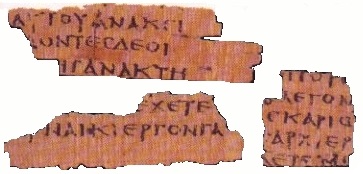
The most ancient texts of the Holy scriptures were written more than 3,000 year ago and possibly as much as 4,000 years ago. The most recently authored texts were written 2,000 years ago.

Any Christian person who understands and believes the cosmos as being the divine and sacramental creation of the triune God who is the main subject of the narrative found in those documents, also sees the origin and provenance of the holy writ as involving divine action of some kind (for example the divine “inspiration” of the author) as a given. How can the scripture be “holy” if God’s hand is not involved in it production, preservation and dissemination of it?
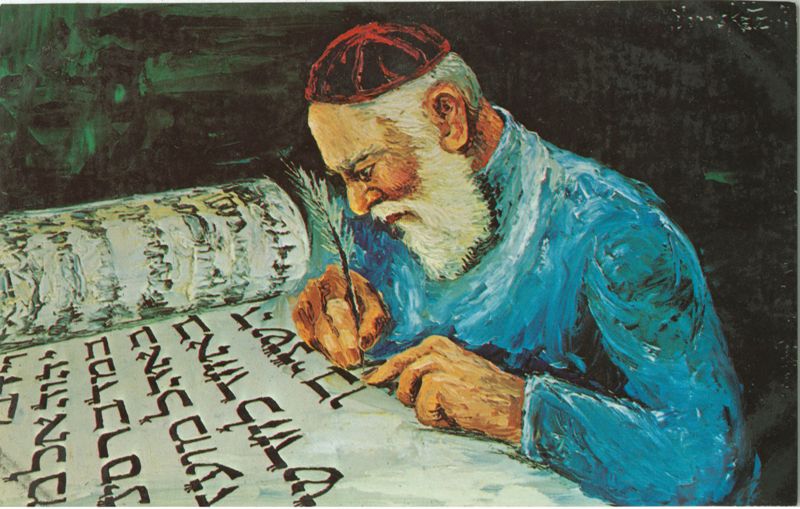
This leads to the thorny and remarkably divisive problems of language translation (which is fraught with potential misunderstanding and translational biases) and textual “understanding” (which is also subject to accidental and intentional biases). These technical issues have severely plagued and divided the “one holy and katholic church” throughout its history but especially since the period of “the reformation” of the that church (i.e., the period of severe fragmentation and division of the church). Note that the Greek term katholic or the Latinized version of that term catholic (the English meaning of which is universal) is a reference to the whole and legitimate Christian church (sometime referred to as the universal church). It is not a reference to the later western denomination (or fragment) of that church which calls itself the Roman Catholic Church (which is a valid arm of the Christian church, but contrary to their claims is NOT the only valid arm of God’s holy and truly katholic church).
The holy scriptures are full of literary metaphors and allegories. These commonly used rhetorical devices are clearly encouraged by the Holy Spirit and used by the biblical authors and by Christ when He teaches the disciples using parables (which everyone understands figuratively and NOT literally). The use of metaphors and allegories never weakens the moral fabric or the divinely intended message being conveyed, or the factual details of the miracles described in the Bible. In fact they often lead to the reader understanding a given passage as having both a valid literal meaning and an equally valid deeper, broader and more generalizable understanding which can be more easily applied to Christian living.

The more fundamentalistic (Biblical literalist) Christians appropriately and strongly abjure the “demythologizing” of the Bible which began to appear in the mid-1800s schools of so call biblical criticism which arose in the “enlightened” reaches of Europe, especially in the mostly apostate German hermeneutical school of the “higher critics.”
The fundamentalist reaction to those heretic interpretations of the holy scriptures was to fall back to a reactionary school of Biblical textual hermeneutics which forbade the use of metaphors and allegories to explain and understand the meanings of the scriptures. The hermeneutical “principle” they clung to was that the literal understanding of the words was always the first, most legitimate, correct and preferred understanding of a given passage, which often led to the ignoring of the sometimes deeper meaning embedded in the text; to paraphrase the movie The Chosen: “They just miss so much.”

The literalist hermeneutic must be understood as being an idea which was just as arbitrary as that of the heretical, apostate, German scholars. The literalist interpretation benefited from having clear and strong boundaries and hence that understanding was authentic and authoritative, however it did not necessary allow God’s Holy Spirit the latitude to chose His own style of literary expression to convey God’s message to His people.
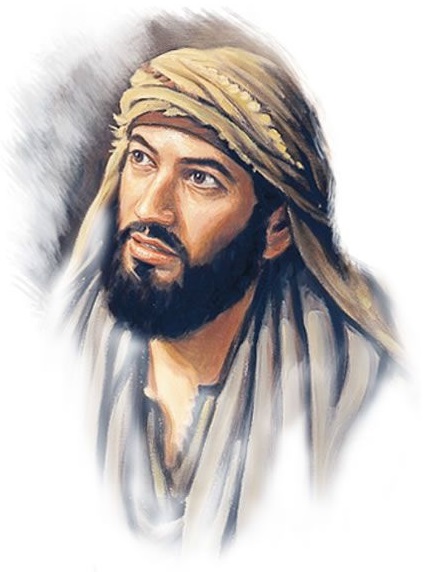
The more sound philological principle should be for redeemed Christians to use their redeemed reason which is one of the three traditional parts of our being made in the image of God. The three characteristics the ancient early church fathers understood as defining the sense in which we were made in the image of God was that we have an immortal soul, a redeemed reason, and a free will, all of which are, of course, substantially similar to those characteristics being present in the persons of the Holy Trinity which make up the fullness of the triune God. This individual redeemed reason does not however, “stand on its own,” but rather it is subject to the expressed wisdom of the Apostles and disciples of Christ and their disciples who were the early church fathers.
This understanding is sometimes referred to called “the mind of the church” and it is deeply intertwined with the allied and more complete understanding of the apostolic succession of the early post-apostolic fathers of the nascent Christian church. My favorite example of the fullness of this concept (which is much fuller and more complete than the laying on of hands) is the historically well documented example that the apostle John the Evangelist discipled Polycarp of Smyrna who, in turn, discipled Irenaeus of Lugdunum, who in turn, discipled Hippolytus of Rome; four men whose pious, faithful and dedicate lives spanned from the life of Jesus the Christ Himself, until the mid 3rd century, ranging from Palestine to Roman Gaul and then the capital of the Roman Empire. While this ancient and truly Christian hermeneutic philosophy may have fuzzier borders, it benefits from not “throwing the baby out with the bath water,” as it were.

This literalist/pragmatist dichotomy is not new. It was the basis for the two Hebrews schools of scriptural interpretation which has existed in Jerusalem since at least 170 BC. The literalist Shammai School and the more figurative Hillel School were both training the Jewish Law scholars referred to as the Pharisees in Jerusalem from 170 BC through the time of Christ. Gamaliel(Acts 5:33-34) was the head of the School of Hillel who trained Paul(Acts 22:3). This literalist/pragmatist dichotomy was also the basis of the difference between two schools of thought in the early Christian church. The literalism of the intermittently present schools at Antioch and the more figurative Great Catechetical School of Alexandria. The Catechetical School in Alexandria was the source of the fully developed understanding of the essential elements of Christianity which advocated for and prevailed regarding all the core doctrines of the Christian faith which became the decisive finding (conclusions) regarding the nature and relationships of the Holy Trinity (three persons, one essence) and those between the man Jesus and the Son of God, the Christ (two natures, one person) in the proceedings of the first four ecumenical councils of the still katholic church.

The great explosion of modern divisive scriptural literalist is a fairly recent phenomena. It took off when the apostate textual scholars of the mid 19th century began composing bogus conjectural narrative alternatives to traditional and orthodox understandings of Christianity and it exploded after Scopes Money Trail in the post world war one era.
It is this author’s strong opinion that the literalist “young earth” view suffers from several fatal flaws; again, “They just miss so much.” In particular, if one assumes the cosmos is a mere 10,000 or so year old, then one implicitly makes God into a liar. No blasphemy intended!
There are mountains of independent observations and hard evidence of events which clearly and reasonably appear to have occur earlier than 10,000 years ago. The young earther must explain why God filled his holy and divine creation with so much false evidence. Of course, God is NOT a liar; the young earthers are well meaning, but mistaken. The truth of the amazing revelations of most of the modern scientific discoveries of the mekhane or mechanisms of the cosmos are, in fact, the finger prints of God on His creation, and thus the details of the mechanisms of modern physics and biology bring profound glory to God !!
The fact that modern science adjures the telos (the reason for or the why or the purpose) of creation is modern science’s great but sad loss; revealing the details of the creation, they lost sight of the bigger and more important whole picture of God’s purpose of creation. The opportunity of man being able to experience the mystical union of holy communion with that creator God and then as a result of his fellowship with and service to God, being able to truly serve mankind.
Like so much of the Christian faith we don’t get to pick and choose the parts of the faith we like, we have to submit ourselves to God in His entirety, and avoid the fallacy of making “God in our own image” in order to avoid the parts of our faith that aren’t convenient to our personal views or the parts which we don’t like. The good news is that “obedience is better than sacrifice!”
If these post are interesting to you, you may also be interested in viewing: https://www.chosendemos.com/
 Lange's Christian Chronicle